

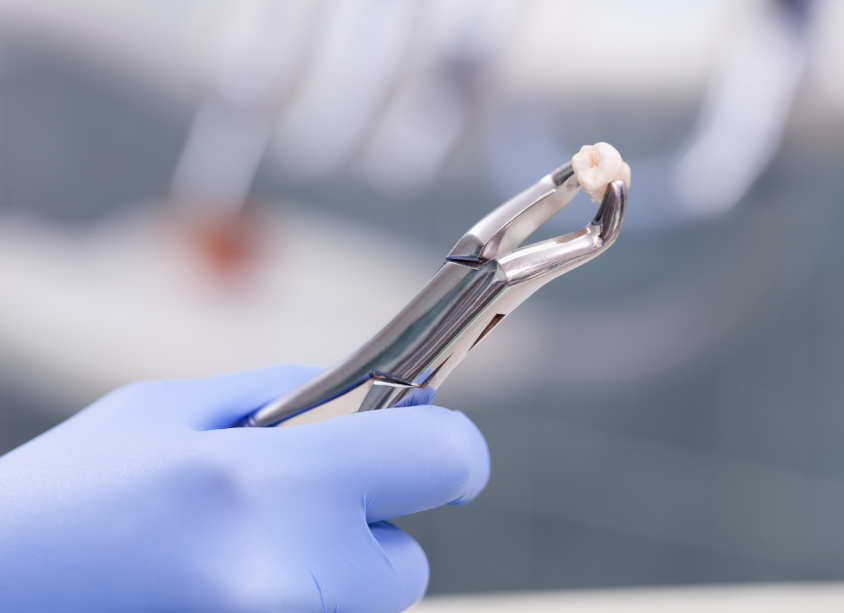
Hearing that you need a tooth extracted can be unsettling. After all, most of us grow up thinking that keeping our natural teeth is always the goal. While preserving a natural tooth is often preferred, there are situations where removing a tooth is the best way to protect your oral health and prevent bigger problems down the road.
Your dentist will not recommend an extraction without a reason. Here are some of the situations that may make tooth removal necessary.
Severe Tooth Decay
A cavity that is caught early can often be treated with a filling. However, decay that has progressed deeply into a tooth can cause extensive damage. If there is not enough healthy tooth structure remaining to support a filling or crown, extraction may be the safest option.
Removing a severely damaged tooth can also help prevent the infection or decay from affecting the surrounding teeth and tissues.
Advanced Gum Disease
Healthy gums help keep your teeth securely anchored in place. Advanced gum disease can damage the tissues and bone that support your teeth, causing them to become loose.
When a tooth has lost too much support, it may no longer be possible to save it. Removing the tooth can help protect the surrounding tissues and create an opportunity to discuss tooth-replacement options.
A Tooth Is Severely Damaged
Accidents, sports injuries, falls, and other trauma can cause teeth to crack, break, or fracture. Depending on where and how severely a tooth is damaged, your dentist may be able to repair it with a filling, crown, or another restoration.
Some fractures, however, extend too far into the tooth to be predictably repaired. In these cases, extraction may be necessary. When a tooth is causing significant pain or has been badly damaged, an emergency tooth extraction may sometimes be recommended as part of urgent dental care.
There Is Not Enough Room
Sometimes a tooth simply does not have enough room to erupt properly. Wisdom teeth are a common example. They may become impacted, meaning they remain partially or completely trapped beneath the gums or bone.
Impacted wisdom teeth can contribute to pain, infection, gum problems, or damage to neighboring teeth. Your dentist or oral surgeon may recommend removing them before these complications develop or when problems have already begun.
To Make Room for Orthodontic Treatment
In some cases, teeth may need to be removed as part of an orthodontic treatment plan. If there is significant crowding, extracting one or more teeth can create the space needed to properly align the remaining teeth.
This does not mean extraction is necessary for everyone who needs braces or clear aligners. Your dentist or orthodontist will evaluate your individual smile and determine whether removing a tooth could help achieve a healthy, functional result.
What Happens After an Extraction?
Having a tooth removed is not the end of your dental care. Depending on which tooth was extracted and your individual needs, your dentist may discuss options for replacing it, such as a dental implant, bridge, or partial denture.
If your dentist recommends an extraction, ask questions and make sure you understand why it is necessary. In many cases, removing a problematic tooth is a step toward protecting your overall oral health and preventing more serious complications.
About the Practice
Dr. George T. Philip, DMD, provides comprehensive dental care with a focus on helping patients maintain healthy, functional smiles. The practice offers tooth extractions as well as restorative and preventive dental services, providing personalized care based on each patient’s individual needs.
Patients can receive guidance on their treatment options before and after an extraction, including appropriate next steps for maintaining their oral health and replacing a missing tooth when necessary.
Call us at (972) 285-6144 or schedule your appointment online