

Dental Crowns – Sunnyvale, TX
Save Your Tooth with a Dental Crown
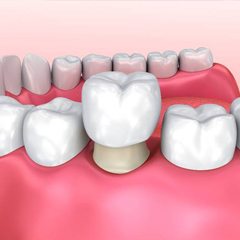
Dental crowns in Sunnyvale are special protective coverings used to restore strength and functionality to a vulnerable tooth. Often, they are used following a root canal or in cases where a filling will no longer be effective. In both instances, the tooth has been weakened, compromising its long-term health. A crown provides a layer of protection to allow you to keep your tooth and the root underneath. Now, with the use of all-ceramic material, crowns are made to closely resemble natural teeth to improve aesthetics. Dr. George T. Philip will create a healthy, functional, and beautiful smile using the best advancements in dentistry.
Dental Crown Process
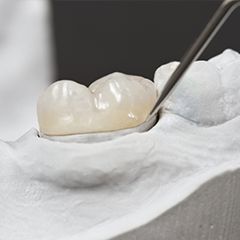
A full crown procedure takes two appointments to complete. During the first, Dr. Philip will remove any remaining decay from around your tooth and reshape it. Our team takes an impression of your tooth, so the dental lab can craft your crown to meet your specific needs, such as the material, shape, and size.
It can take the lab a couple of weeks to create it with precision, so you will wear a temporary crown until the permanent restoration is ready. After it is finished, you will have your second appointment to have the temporary one removed, and the finished crown bonded in place.
Cost of Dental Crowns
There is no set price for dental crowns. On average, they cost $500 to $3,000 per tooth, which does not include the fees for additional procedures that may be needed, like a root canal. The vast difference in price is due to several factors, such as the materials used and your dental coverage.
Often, you can use your benefits to pay for a portion of the restoration. Depending on your specific policy, your insurance may cover 50% to 80% of the crown. Our team will work on your behalf with your insurance company to maximize the value of your benefits to reduce the amount you will need to pay out-of-pocket.
Indications for Crowns
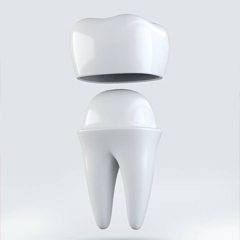
Crowns are quite versatile. They can be used for preventive, restorative, and cosmetic purposes. If you have a weakened tooth from grinding your teeth, a crown can protect it from breaking.
They are most often used in restorative dentistry to rehabilitate a decayed, infected, or broken tooth. It is not uncommon for them to be used in combination with other procedures, like a root canal, bridge, or dental implants.
You can also improve the appearance of a discolored or abnormally shaped tooth with a crown. Using all-ceramic material, the imperfections are covered to leave you with a beautiful crown that looks like a real tooth.
Caring for Crowns

Dental crowns typically last for about 10 years before needing to be replaced; however, with the right care, it is not uncommon for them to last longer. To promote its longevity, brush your teeth twice a day for at least 2 minutes each session. Floss every night before going to bed. Pay extra attention when cleaning where the crown meets your gum to remove bacteria and plaque.
Although crowns are durable, they can break. To prevent damage, avoid chewing overly hard foods with it, like ice. Instead, chew on the opposite side of your mouth.
Do not forget to visit your dentist in Sunnyvale twice a year for a cleaning and checkup.
Understanding the Cost of Dental Crowns

Your financial situation should never prevent you from getting the high-quality restoration you need. There's no flat fee for a dental crown because there isn't a one-size-fits-all restoration. The amount you'll pay is based on your individual treatment plan. Dr. George T. Philip strives to keep dentistry affordable for everyone. Our office offers various options to keep dental crowns within everyone's budget. He will create the durable restoration you need to preserve your smile.
Factors That Affect the Cost of Dental Crowns

Every mouth is as unique as fingerprints, which is why dental crowns must be custom-fit. Many factors will affect the cost. Although every situation differs, you can expect your estimate to include:
- Consultation: You'll require an initial consultation to determine if a dental crown is right for you and to create your treatment plan. Besides a visual examination, you may require X-rays, impressions, or other diagnostic services.
- Preliminary Procedures: Dental crowns can be used along with many other procedures, like root canal therapy or a bridge. Your tooth must be prepared for the crown. It will be reshaped to allow the crown to fit over it.
- Location: The location of the tooth being treated can also affect the cost. Molars can be more complex than front teeth.
- Materials: You have many materials to choose from, like all-ceramic crowns. It's best to choose quality over a low price. Discounted materials can be of low quality, so they may not last as long.
Does Dental Insurance Cover Dental Crowns?

You can use your dental insurance for your consultation and any diagnostic services after a co-payment. Depending on your situation, your insurance may cover 100% of your consultation and other diagnostic services. If your crown is medically necessary, your insurance will pay some of the expense after reaching your annual deductible. Crowns are considered a major service, so they are typically covered about 50% until meeting your yearly limit. We will work on your behalf with your insurance to maximize any applicable coverage to lower the amount you will pay out-of-pocket.
Options for Making Dental Crowns Affordable

Besides using your dental insurance, our office accepts many payment options, like:
- Traditional Payments: You can pay for any services using traditional methods, like cash, personal checks, or credit cards.
- Monthly Installments: Based on your credit approval, you can pay any out-of-pocket expenses using monthly installments through a third-party financing company, like CareCredit. You can enjoy little or no interest in financing while finding the payment plan that fits your budget.
If you have any questions about your payment options, contact our office today.
Restore Your Smile Today!
If you need a dental crown, Dr. Philip has the solution you need. Contact our office today to schedule your consultation.
Dental Crown FAQs
Have you been told that you’re in need of a new dental crown? You may still have some unanswered questions about the procedure, so we’re here to help. Here are the answers to some of the most common queries we receive about dental crowns in Sunnyvale. If you don’t see the information that you’re looking for below, just give us a call . We’d be happy to walk you through the procedure so you can feel more prepared.
Are Dental Crowns Permanent?
Dental crowns aren’t technically permanent, but they are considered to be a long-term solution. On average, they can protect your tooth for anywhere between 5 and 15 years. When Dr. Philip reshapes your tooth for a crown, the procedure is irreversible, as tooth enamel does not grow back. That tooth will always need a crown for protection moving forward. That being said, crowns protect the underlying tooth from additional damage, therefore helping the tooth to survive for much longer than it likely would have otherwise.
Do Dental Crowns Get Cavities?
It is impossible for a crown itself to develop cavities, but the tooth beneath it still can. In fact, a crowned tooth has about the same risk of decay as an uncrowned tooth. Poor oral hygiene makes it possible for bacteria and plaque to collect along the gumline where the tooth meets the crown. They can then travel underneath the crown and cause problems for the underlying tooth. To prevent cavities from developing, keep up with daily brushing and flossing, and see your dentist for regular cleanings and checkups.
Does It Hurt to Get a Dental Crown?
Just like when you get a filling, your dentist will numb the tooth they’ll be working on when you get a crown. While you shouldn’t feel any discomfort during the procedure itself, you are likely to experience some sensitivity for a few days afterwards, especially if you have also undergone a root canal. To manage this, take over-the-counter pain relievers as directed. If discomfort worsens, give us a call so we can help.
Do Dental Crowns Feel Natural?
Within a few days of receiving your permanent crown, it should start to feel increasingly natural. Crowns are made from durable materials that can stand up to everyday chewing forces just as well as tooth enamel, so eating with your crown shouldn’t field weird. Additionally, every crown is customized based on the impressions taken of your tooth after it was reshaped. Ultimately, it shouldn’t feel awkward or even noticeable.
What Are Dental Crowns Made Of?
In the past, dental crowns were often made from amalgam mixtures of metal which, although durable, often left smiles looking dark and dirty or feeling extra sensitive. Today, Dr. Philip uses resilient, tooth-colored materials, such as porcelain, instead.
This durable ceramic can be customized to match the size, shape, and shade of your natural enamel for beautiful results that boost your confidence. Plus, it’s less porous than enamel and is therefore better able to resist chips, cracks, and discoloration to help protect your tooth.
Can Dental Crowns Be Whitened?
Your dental crown can resist stains, but that doesn’t mean it’s completely invincible. Repeated or frequent exposure to common culprits known to cause discoloration, such as tea, coffee, berries, tomatoes, or wine, can eventually leave your restoration looking worse for wear.
Unfortunately, because it’s not made from the same organic components as your teeth, it usually doesn’t respond to topical bleach. If you want to brighten your grin, we might recommend that you lighten your enamel before having your prosthetic placed. That way, the ceramic can be color-matched to the upgraded shade.
How Long do Dental Crowns Last?
If you’re worried that getting a tooth-colored restoration means you’re sacrificing longevity to enhance your appearance, you can thankfully set your fears aside. Lifelike dental crowns often last 5 to 15+ years when cared for correctly, which can be just as long as their metallic counterparts.
But their lifespan can also depend on your unique circumstances. For instance, a cap placed over a molar might wear down faster than one over a front tooth because it sustains more pressure from biting and chewing.
Typically, you can help maintain the cover by implementing a twice-daily at-home dental hygiene routine, avoiding overly dark, hard, or sticky foods, and visiting our team every 6 months for a checkup and cleaning.
What Are the Signs I Need a New Dental Crown?
Knowing the signs that your dental crown is wearing down can help you contact our office in time to provide a new one before it fails. Some potential indicators can include:
- Aches. If your tooth or gums around your restoration feel sore or sensitive, you might have developed decay or disease requiring its removal to treat.
- A loose or wobbly restoration can result from eroded dental cement over time.
- Worn-down appearance. If your crown looks dark, dirty, or is chipped and cracked, replacing it can boost your confidence in your smile.
- Dark line at the base. Porcelain-fused-to-metal restorations often reveal the darker material as the ceramic wears down, which can cause a dark line to form where it meets your gum tissues.