

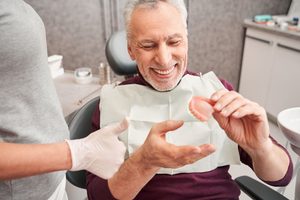
Dentures are the tried-and-true solution for tooth loss that remains popular among patients today because they can be incredibly convenient and versatile. Your dentist can help provide a lifelike set of replacement teeth to rebuild your smile regardless of how many permanent ones went missing.
But over time, your restoration can become ill-fitting, making it harder to eat or speak confidently. It might even feel loose or frequently fall out at inopportune times, which can be embarrassing. Continue reading to learn more about how your dentist can help reline your dentures to improve their fit!
Why Don’t My Dentures Fit Well Anymore?
Did you know that your teeth help support and strengthen your jawbone? Each time you bite down, the roots trigger your jaw to produce new bone growth, helping keep it active and healthy. Unfortunately, when one or more go missing, the foundation of your mouth becomes thinner and more frail.
That means your dentures, which were designed using accurate impressions of your mouth, can eventually become ill-fitting. As your jaw thins, they are less able to create a tight enough suction against your gums to remain firmly in place throughout the day. This can make certain tasks, like chewing food, enunciating words, or smiling confidently, much more challenging.
What is Denture Relining?
Thankfully, if your dentures are still in good shape, your dentist may be able to improve the fit by relining them. This refers to the process of adding additional materials to the base of your restoration to account for any changes to your jawbone structure and improve their fit.
There are two types of relining, which are outlined in more detail below:
- Soft relining. This option involves placing rubber or silicone-based materials on your dentures that provide additional cushioning for patients who are prone to sensitivity. This can potentially extend the lifespan of your restoration by about 6 months to about 1.5 years.
- Hard relining. If you choose this method, your dentist will add harder, more rigid acrylic to reshape the base of your prosthetics instead. This improves long-term stability and can last 2+ years, but it might cause sores in patients with tender connective tissues.
What Type of Denture Relining is Right for Me?
If you’re unsure what type of denture relining would benefit you the most, you can contact your dentist to schedule an appointment to learn more. They will examine your dental condition as well as your restoration, then provide a customized treatment plan based on their findings.
Whether you get a hard or soft reline, your provider can help improve the fit of your dentures so you can continue making the most of their many benefits!
Meet the Author
Dr. George Philip takes pride in helping improve people’s lives by enhancing their dental health. He earned his Doctor of Dental Medicine from the Nova Southeastern University College of Dental Medicine, and today, he has 20+ years of experience providing a complete menu of services, including customized dentures, to meet his patients’ unique needs conveniently under one roof. His compassionate approach, paired with advanced technology, yields beautiful, accurate results meant to last. You can request an appointment on the website or by calling (972) 285-6144.